
Making headway
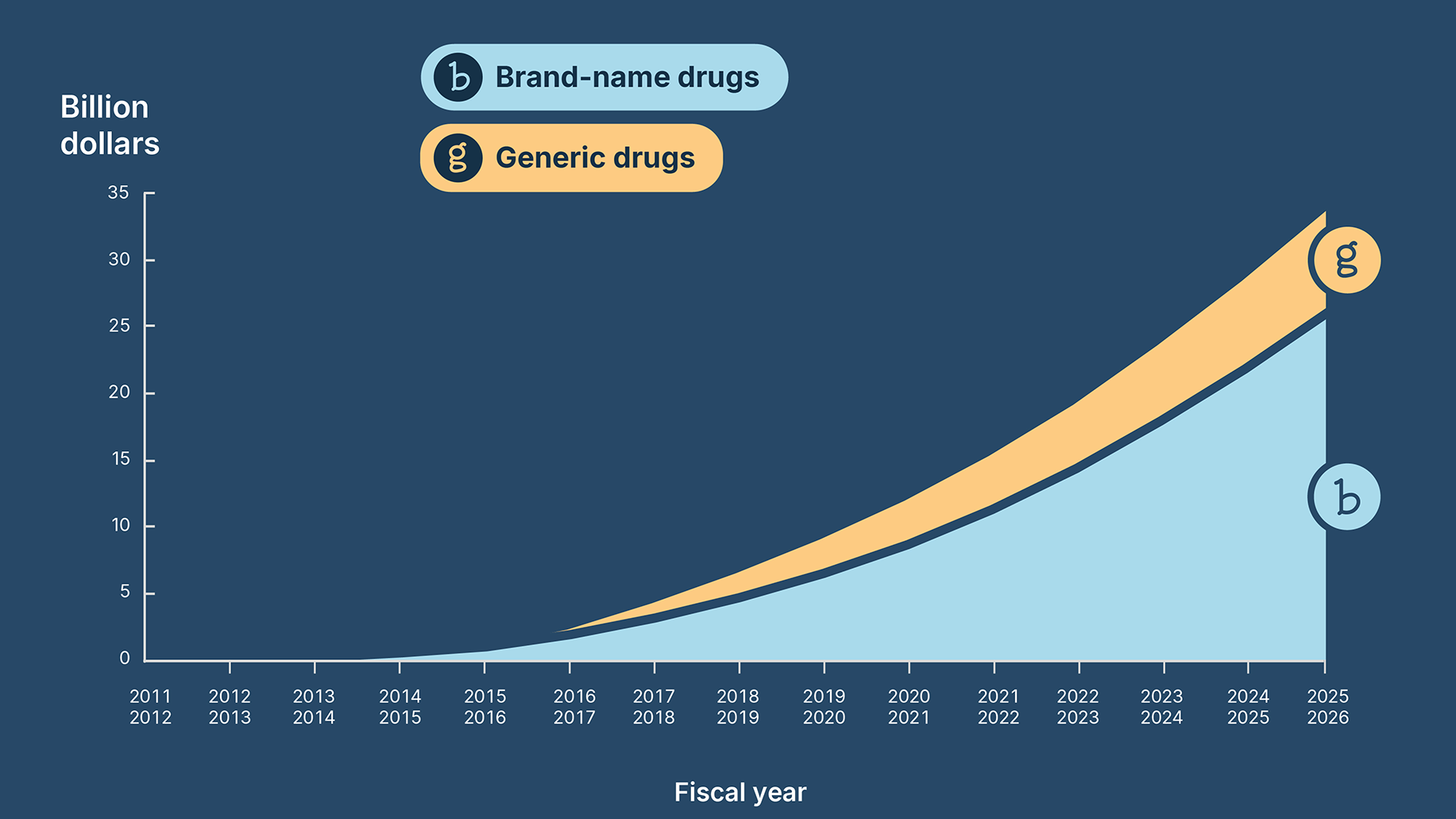
Every journey has milestones that signal meaningful progress. In 2025–26, we reached several. Even with significant resources devoted to major organizational initiatives like new or expanded expedited negotiation pathways, the pCPA delivered results at a record pace, and saved public drug plans an estimated $5.36 billion.
A record-breaking year for brand-name negotiations
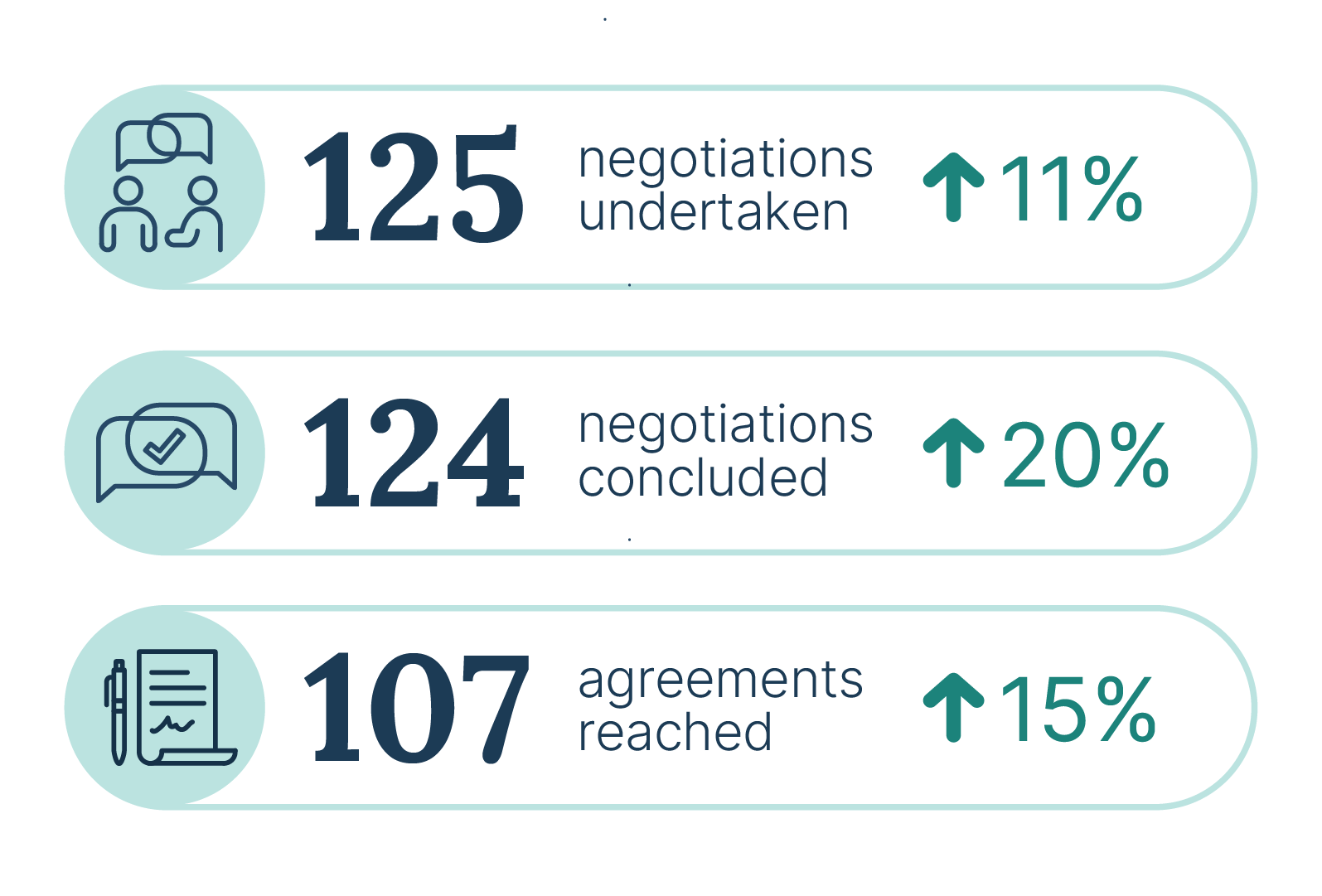
In 2025–26, negotiation volumes reached another record high, resulting in more agreements than we’d ever completed in a year before.
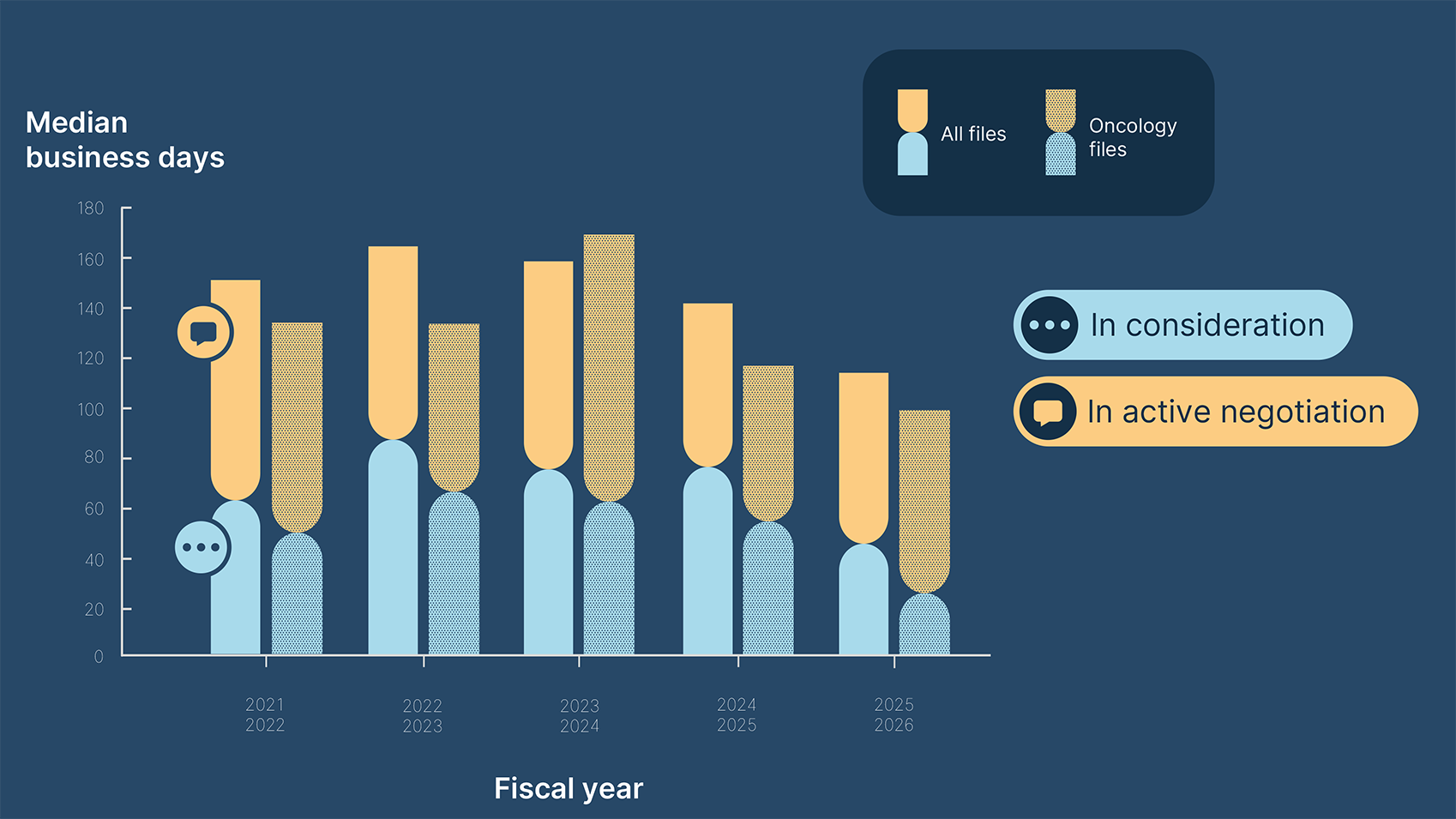
Timelines
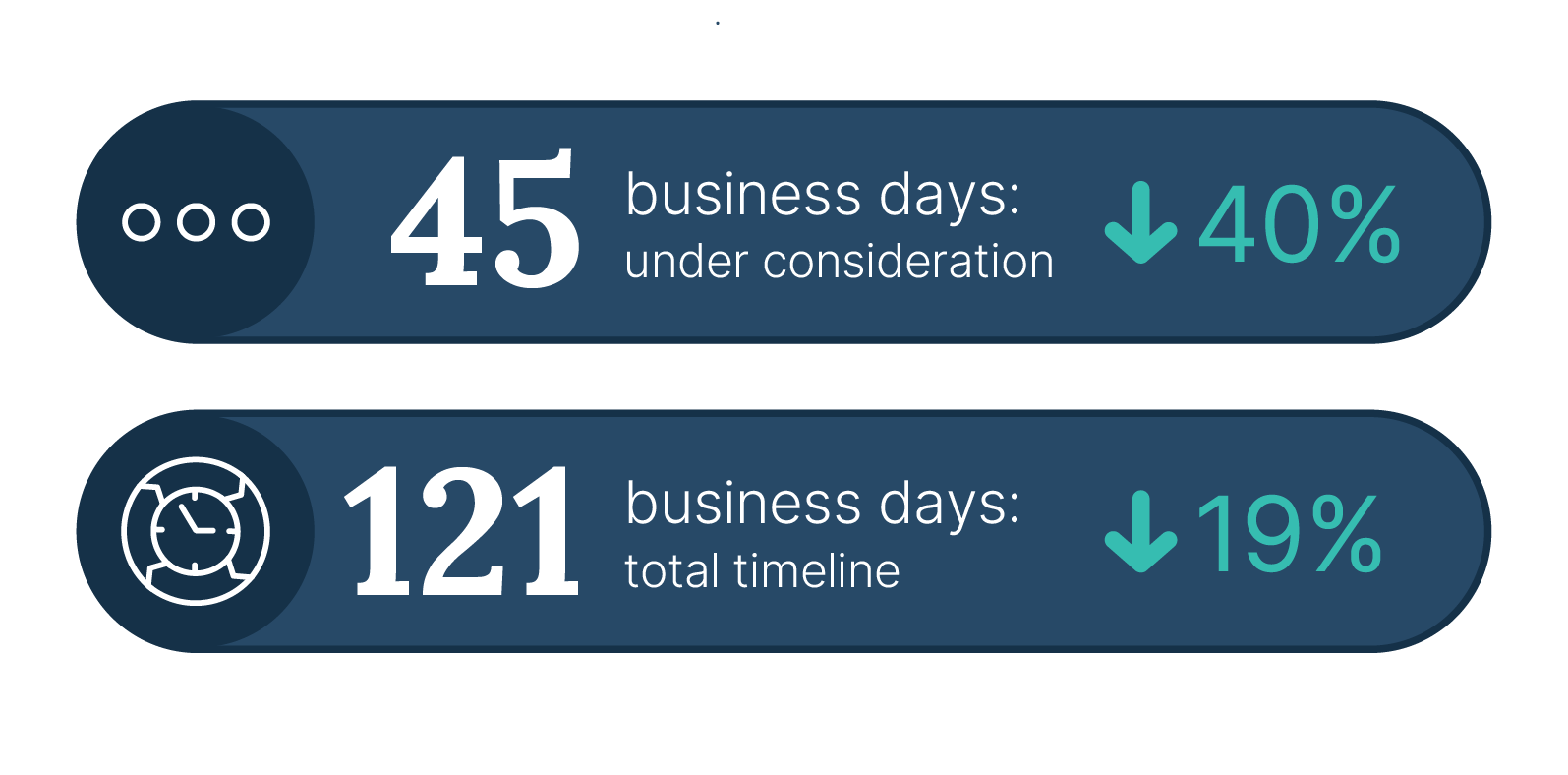
Our timelines across all files — and especially time under consideration — continued to improve.
Reliable progress for generic drugs
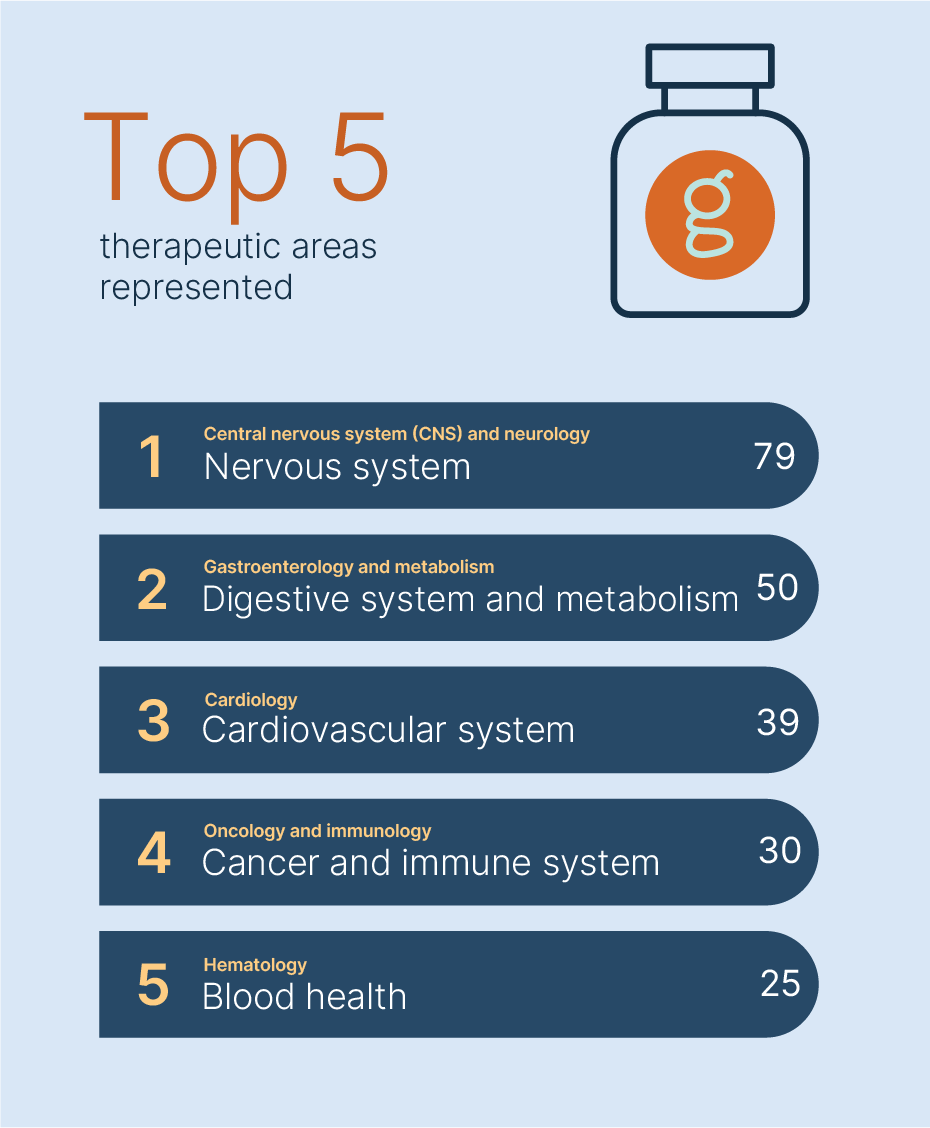
The number of generics files remained consistently high, with a slight increase in market entries.
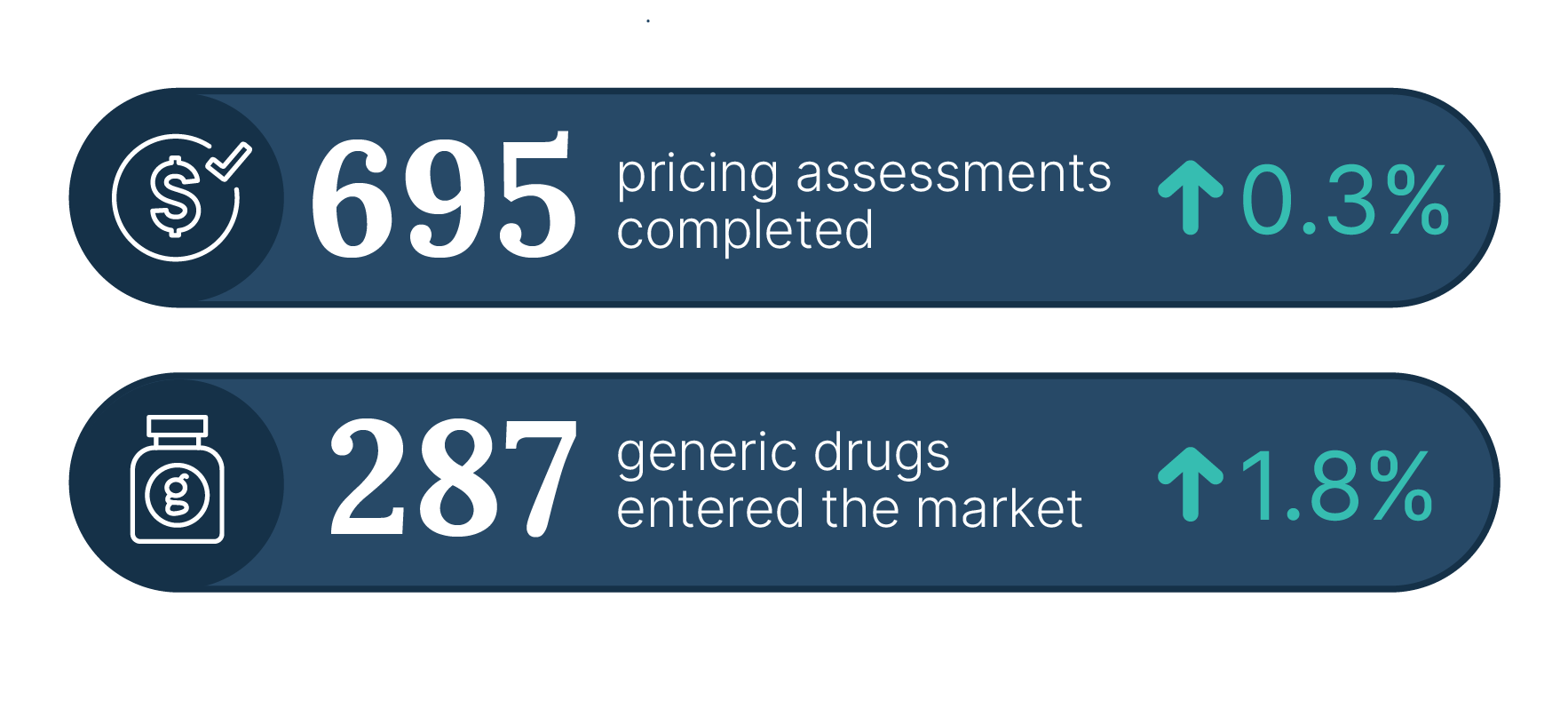
What is a pricing assessment?
It’s the process we use to determine the applicable pricing tier and pan-Canadian list price under the tiered pricing framework (TPF) when a new generic drug is entering the market. An assessment is also done to confirm a new price when increasing or declining numbers of competitor products result in a tier change.
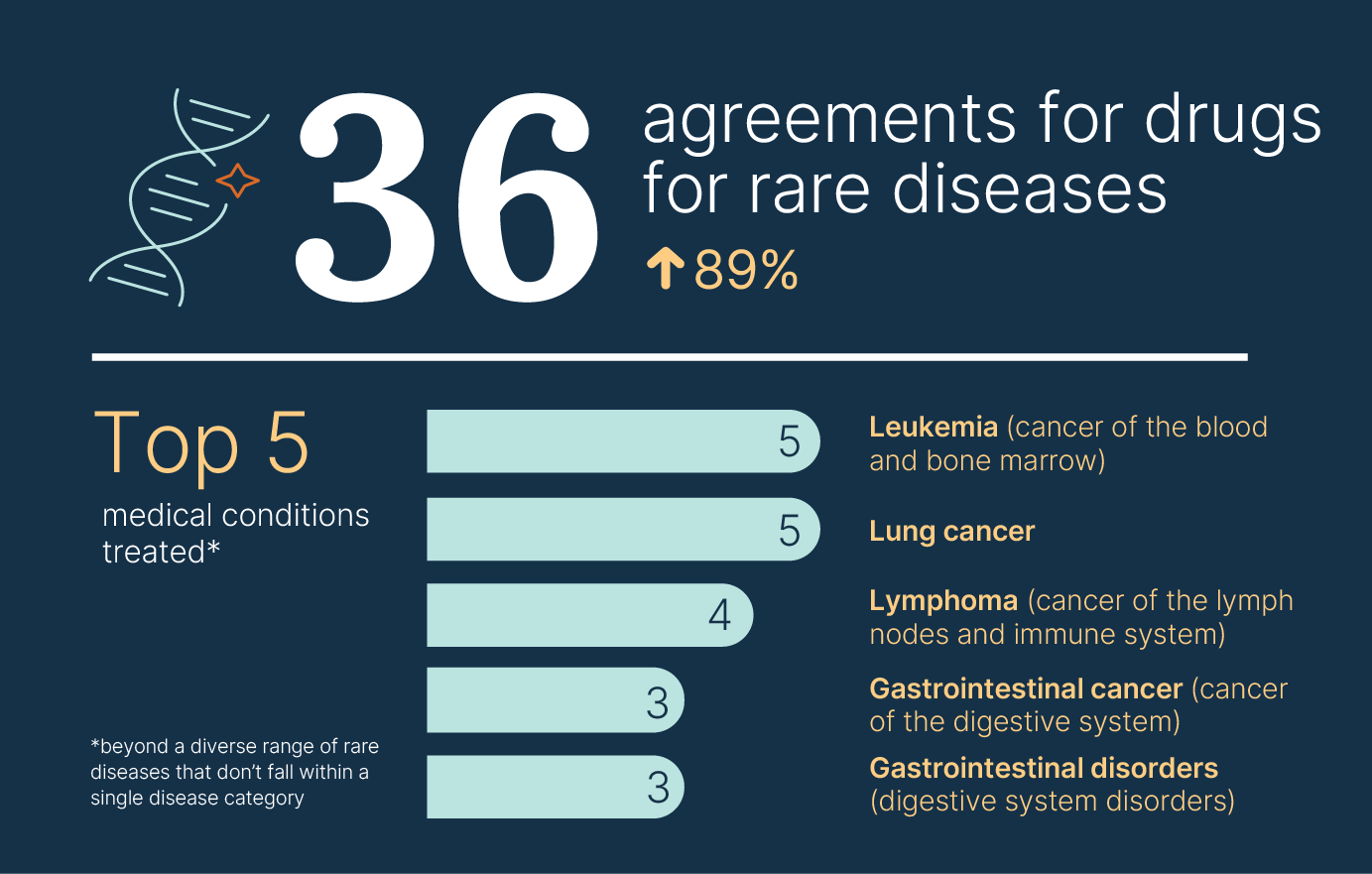
Nearly 2x more agreements for drugs for rare diseases (DRDs)
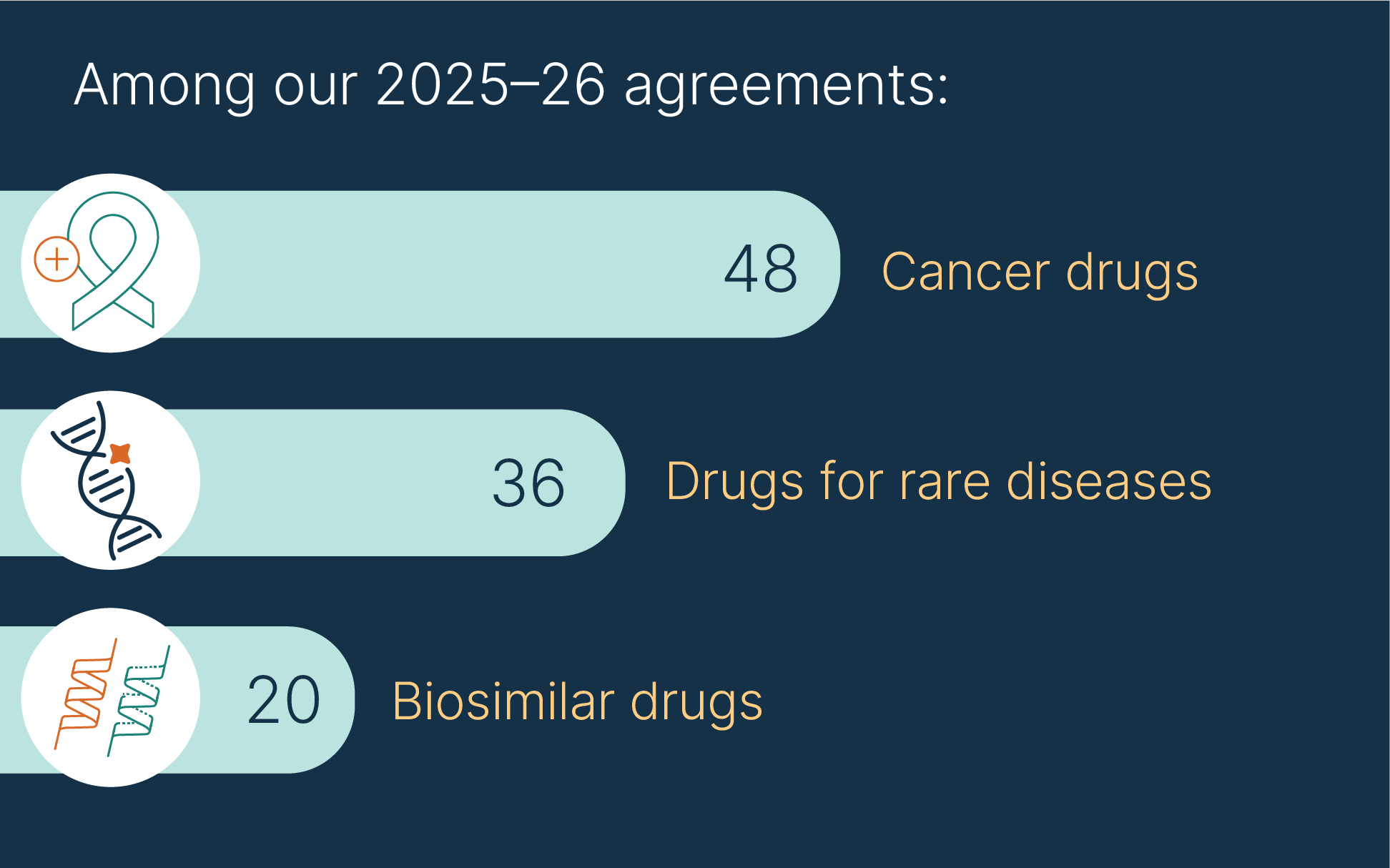
In 2025–26, we successfully negotiated 36 drugs for rare diseases — nearly double the number achieved the previous year.
This included several drugs that were added to Health Canada’s common list of drugs for rare diseases:
- Winrevair (sotatercept) for pulmonary arterial hypertension (high blood pressure in the lungs)
- Livmarli (maralixibat) for cholestatic pruritus (severe itching) in patients with Alagille syndrome (genetic liver disease)
- Breyanzi (lisocabtagene maraleucel) for 2nd line treatment of diffuse large B-cell lymphoma (cancer of the lymph nodes and immune system)
- Enhertu (trastuzumab deruxtecan) for 2nd line treatment of HER2-positive gastric or gastroesophageal junction cancer (stomach or upper digestive tract cancer)
- Evkeeza (evinacumab) for homozygous familiar hypercholesterolemia (inherited condition that affects cholesterol levels)
- Imcivree (setmelanotide) for Bardet-Biedl syndrome (genetic disorder affecting multiple body systems)
- Hemgenix (etranacogene dezaparvovec) for hemophilia B (inherited bleeding disorder affecting clotting)
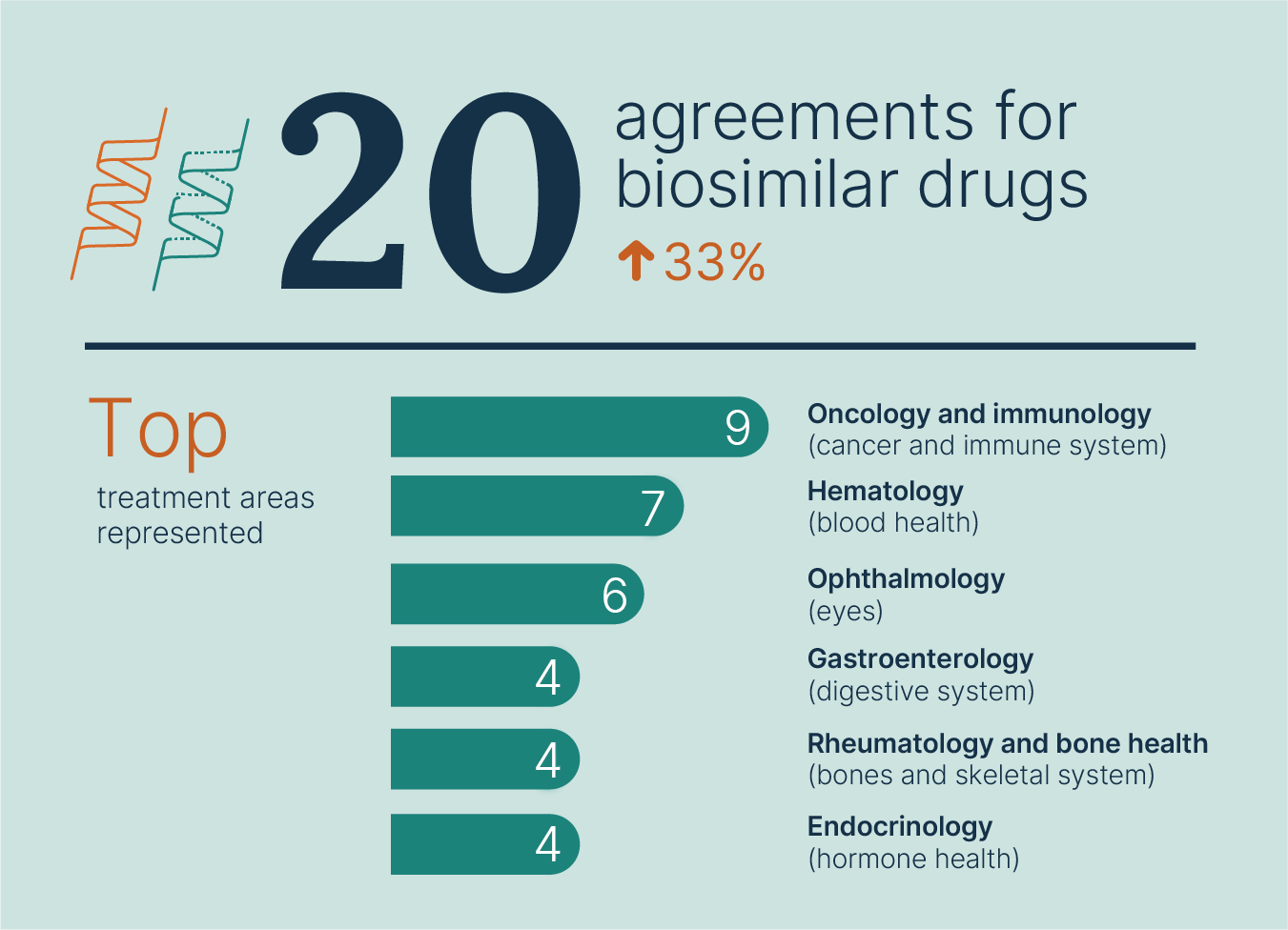
1.3x more biosimilar drug agreements, reached faster
Last fiscal year, we successfully negotiated 20 biosimilar drugs representing 8 reference biologic drugs, and 90% of these negotiations included multiple indications.
Cancer drug agreements up and time under consideration cut in half
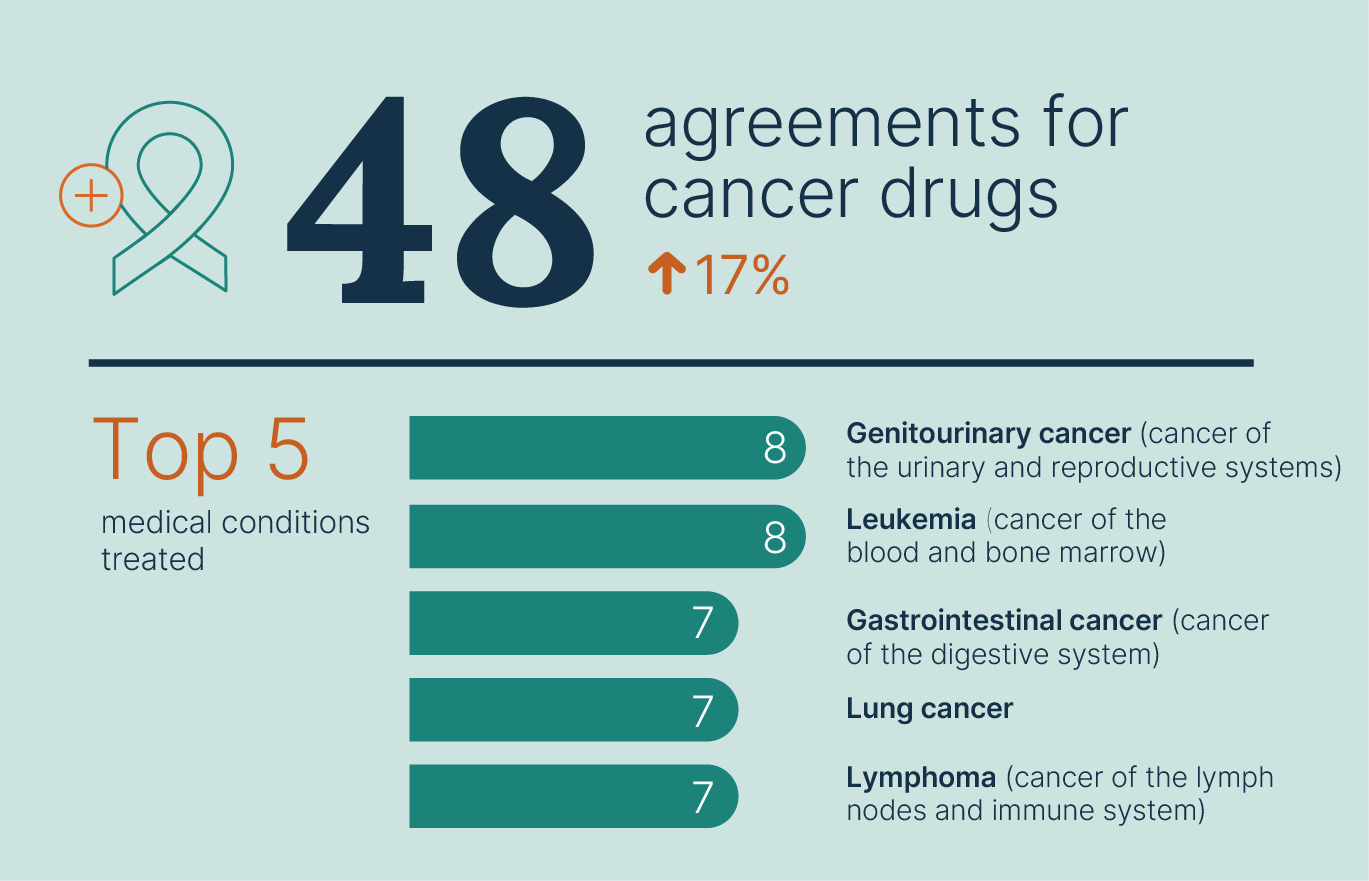
In 2025–26, we reached agreement for 48 cancer drugs and completed these negotiations 20% faster than non-cancer drugs.