


Exploring new routes

Getting from here to the road ahead means exploring new routes.
As the drug reimbursement landscape evolves, so too must the processes we use to navigate it. Over the last fiscal year, we explored new or expanded negotiation pathway options to support earlier and faster negotiations. In late 2025, we were thrilled to launch the early negotiation process (ENP) for Project Orbis cancer drugs, and the revised targeted negotiation process (TNP) for non-complex negotiations, including drugs that are comparable to others already available in the market.
The success of these pathways depends on strong collaboration with Canada’s Drug Agency (CDA-AMC) and the Institut national d'excellence en santé et services sociaux (INESSS). The ENP especially reflects a growing emphasis on finding opportunities for work to occur concurrently in our respective processes, rather than sequentially. New routes don’t always require forging totally new paths, and the TNP revision is a good example of that. Originally launched as a pilot project in 2021, we expanded it in 2025 to include drugs that are part of the PACES (pharmaceuticals with anticipated comparable efficacy and safety) pathway from the CDA-AMC.
The development and implementation of these pathways required teams across the organization to think differently, work differently, and learn and execute quickly. Together, they delivered a significant organizational achievement in a relatively short period of time, demonstrating the pCPA’s growing agility and capacity for innovation.
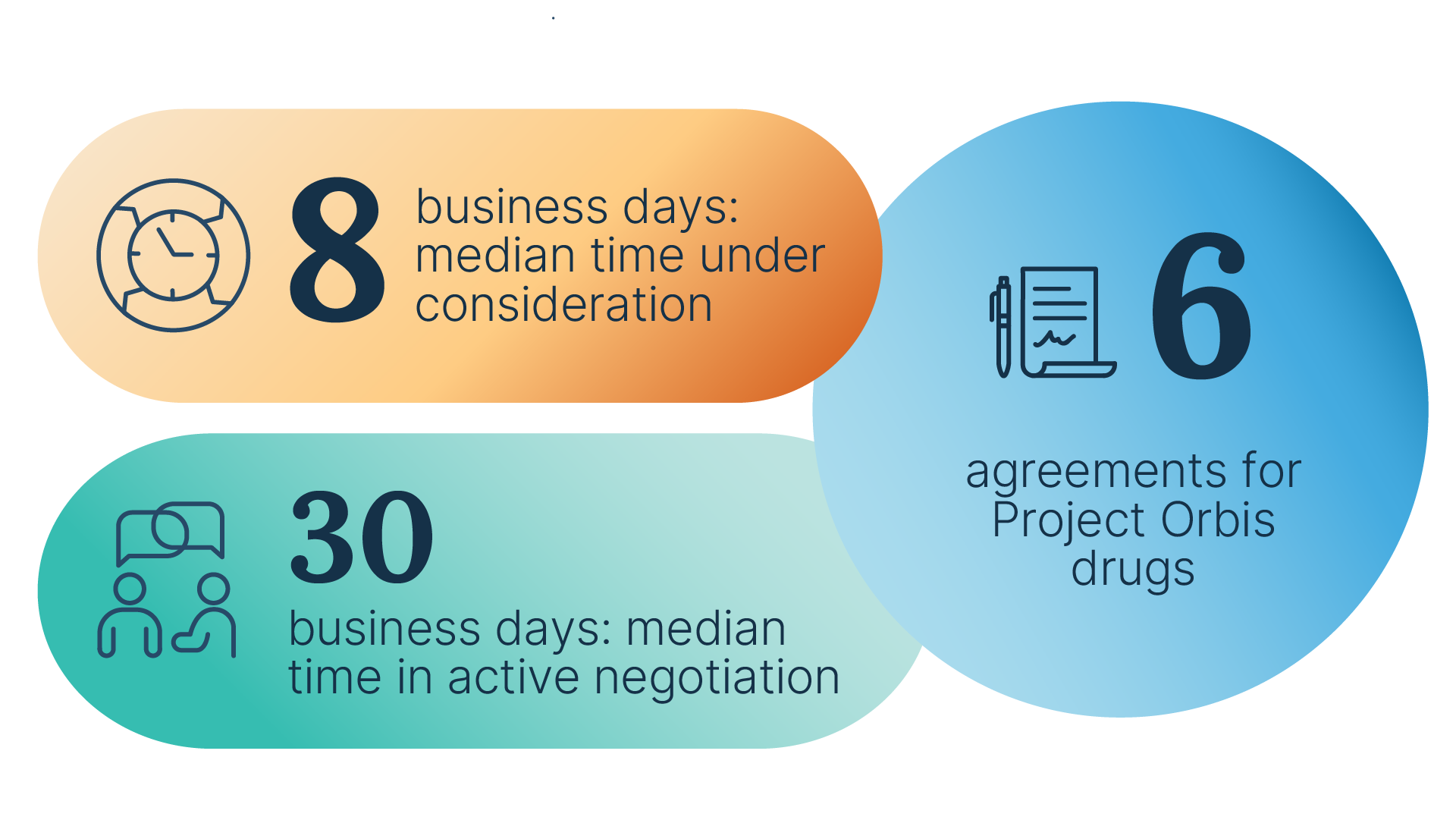
ENP and Project Orbis
All negotiations completed in 2025–26 for drugs that would have been eligible for the ENP were initiated before the ENP was launched. Several Project Orbis drugs were negotiated using our standard process and the median negotiation time for these files was 67% shorter than the median for all standard negotiations. . This reflects the work to prioritize and accelerate key files that was already well underway before the ENP was implemented.
TNP by the numbers
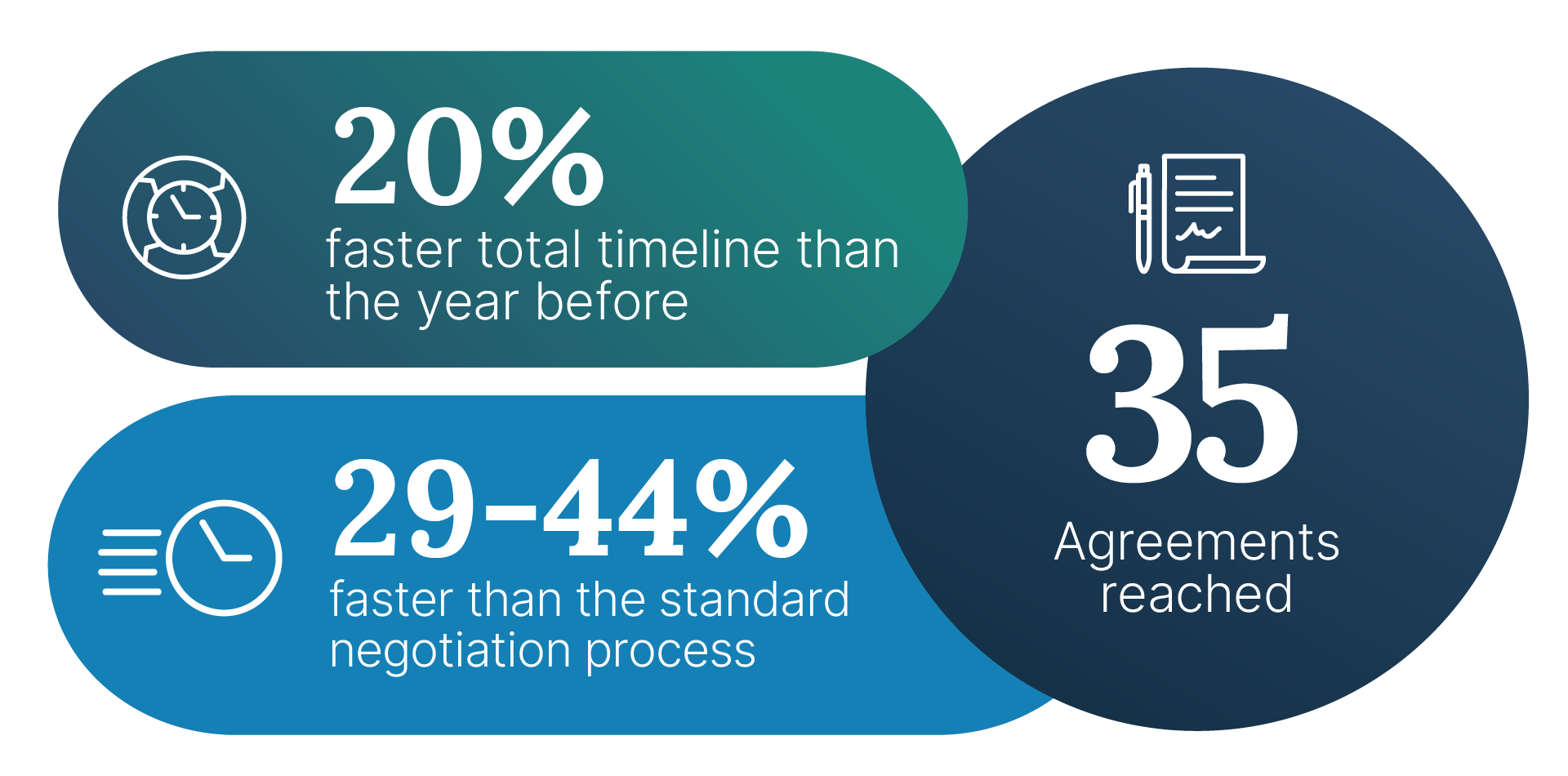
There were roughly twice as many TNP negotiations undertaken and concluded compared to 2024–25. Nearly 1/3 of all agreements in 2025–26 were TNP files.
“Through the pCPA’s targeted negotiation process, we’ve been able to work together efficiently to reach timely agreements. This collaborative approach demonstrates the value of streamlined negotiations with a focus on efficiency. We look forward to working with the pCPA on more of these files, with the shared goal of improving drug coverage timelines to ensure patients receive timely access to needed therapies.”
Alison Pozzobon, VP Communications, Government Affairs and Market Access, GSK Canada
What about the temporary access process (pTAP)?
We successfully completed our second pTAP negotiation in April 2025 for Enhertu (trastuzumab deruxtecan), a treatment for adults with advanced HER2-positive (high HER2 protein) stomach cancer or cancer where the esophagus meets the stomach.
Launched in 2024, pTAP was designed to negotiate temporary prices for innovative drugs or new approved uses of drugs that show early promise and have been given conditional regulatory approval. This allows eligible patients to receive public coverage while more evidence is collected.
Navigating with confidence
The best navigators never stop reading the road. They continually take in new information and use those insights to adjust and make decisions along the way.
We’ve long taken this approach in our work and in 2025–26 we expanded upon it by seeking
and creating more opportunities to interact and connect with partners and others impacted by our work. Consultation became an increasingly important tool for hearing from diverse perspectives and strengthening our work. By early 2026, we’d sent more than 300 invitations to engage in consultations for various projects.
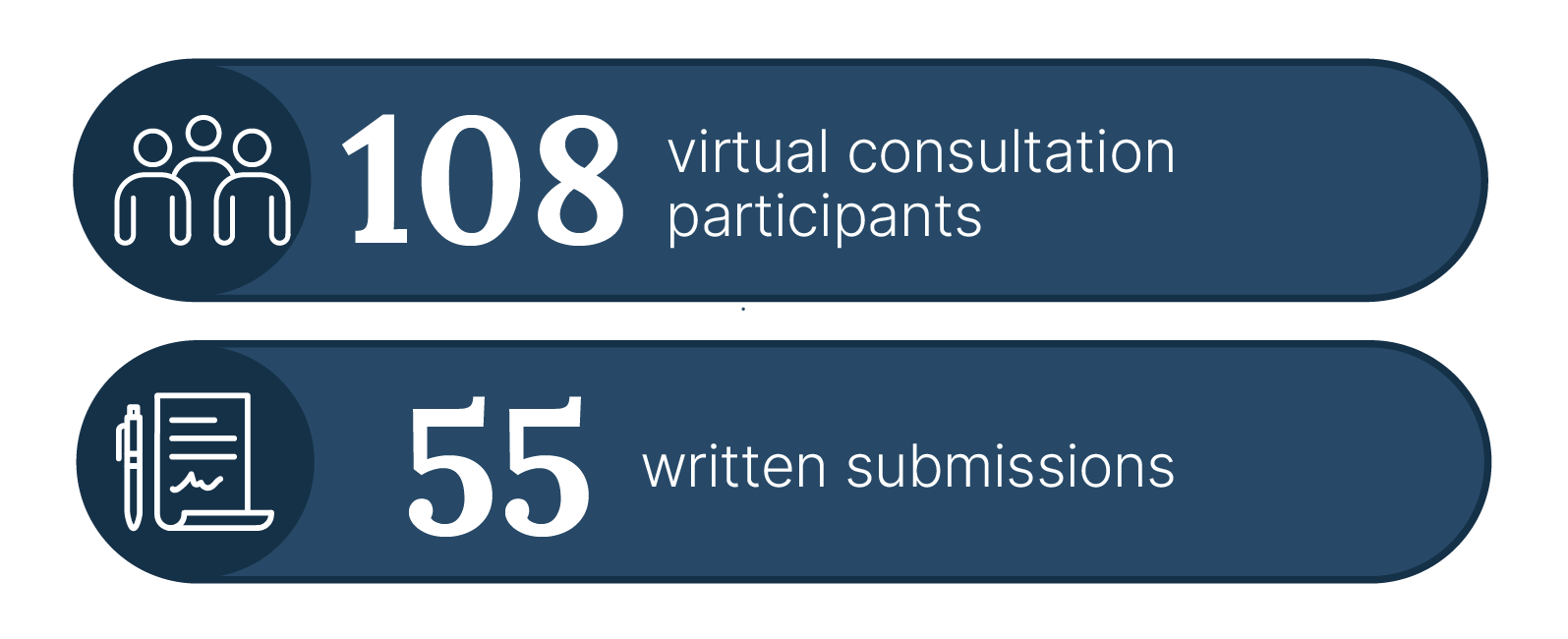
Notably, last fall we sought feedback as we prepared to introduce the new and revised expedited negotiation pathways. Feedback also informed meaningful course corrections. Through virtual sessions and a public survey, we gathered valuable insights and refined the pathways based on what we heard. This resulted in stronger pathways informed by practical experience and various perspectives and reinforced the value of consultation as a tool for continuous improvement.
The pathway consultation provided an early opportunity to test new approaches to listening, learning and adapting as we continued to explore how we can make engagement a more intentional part of how we collaborate and shape our work.
Partner feedback
We refined the language used in the principles of both pathways based on what we heard, and made the following changes made to the ENP:
- Increased flexibility in pathway participation
- Removed set limit on offer exchanges during the negotiation window
- Adjusted initiation timing to provide a longer negotiation window
“The pCPA’s early negotiation process is an encouraging step in the right direction for patients with breast cancer to improve timely access. With this national negotiation pathways, timelines for coverage of new drugs will be reduced for patients across the country, making progress at a time when every day matters. We want to recognize the pCPA for taking action and putting patients first.”
Kimberly Carson, CEO of Breast Cancer Canada